
In an angry reaction to US Defence Secretary Ashton Carter's remarks that "China's actions could erect a Great Wall of self-isolation" in the South China Sea, Chinese foreign ministry spokesperson Hua Chunying told media that "Carter's remarks reflected typical American style thinking and hegemony".

China is going to be an indispensable partner in Russia's ongoing crisis with the US, while on its part, China cannot remain indifferent if Russia gets crushed by the US, lest it loses 'strategic depth', observes Ambassador M K Bhadrakumar.

'He was making a broader point. Our allies and partners know very well that -- how much this president respects them'

In the test, a space rocket boosted a hypersonic glide vehicle, one capable of carrying a nuclear device, which circled the globe before impacting.

US Secretary of State Hillary Clinton has briefed visiting British Foreign Secretary David Miliband on her recent trip to India along with other issues, which she said was wonderful. "I updated the foreign secretary on my recent travels to India and Thailand, and our just-concluded Strategic and Economic Dialogue with China," Clinton told reporters after the meeting with Miliband at the Foggy Bottom headquarters of the State Department.

The leaders of the Quad comprising India, the United States, Australia and Japan are set to demonstrate that the grouping is a 'force for global good' and has a unifying commitment to a rules-based international order amid China's increasingly intimidatory behaviour.

Defence and strategic experts on Monday said that China's posturing in the Indian Ocean will disturb stability and peace in the region.

In retrospect, it appeared that the bitterness of the war was still strong and the Ukrainian success in occupying Russian territory just a few days ago had added to the complexity of the situation. The positive US response to the visit, however, remains a silver lining in the dark clouds, notes Ambassador T P Sreenivasan.

Key to China's decision regarding Taiwan will be its leadership's assessment whether the US will come to Taiwan's defence, explains Jayadeva Ranade, the former senior RA&W officer and China expert.

He said that the government of India has never accepted this illegal occupation.

'Chinese experts estimate that the new US administration is 'at the crossroads of how to re-manage and control' Sino-American differences and strategic divergences and Biden's bottom line is that the US would have 'extreme competition with China, but won't allow competition to develop into conflict',' notes Ambassador M K Bhadrakumar.
"Engagement means deepening cooperation with key centres of power. In Russia, the reset, has elevated relations to the best point in years. In China, we now have a broad- based strategic and economic dialogue. In India, which President Obama calls one of the defining relationships of the 21st century; and obviously in Brazil," US National Security Advisor, General (rtd) James Jones said.
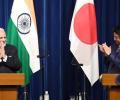
During the 13th annual summit, the two prime ministers reviewed developments in bilateral relations and explored new areas of cooperation, focusing on shared vision for peace and prosperity in the Indo-Pacific, where China is flexing its muscles.
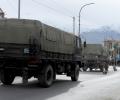
China is in no hurry to disengage at the border and the region and international community is moving on. The spectre of a long haul in Ladakh haunts India, points out Ambassador M K Bhadrakumar.

The issues around trade gaps, especially around steel and aluminium tariffs imposed by the US, will be addressed separately.

Although the credit for acquiring the technological skill must be given to India's outstanding nuclear scientists, the decision to go nuclear was a political one that entailed clarity of vision, courage and resolve, points out Rup Narayan Das.
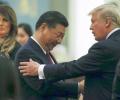
'While many Chinese policy makers dismiss the political, economic and technological component of US-India relations, they express caution on the defence-related ties which also happens to be a major driver in US-India relations,' explains China expert Srikanth Kondapalli.

'Russia remains in a unique position since it has special strategic relations with both India and China and these relationships are independent in nature'

The India-Japan joint naval exercises are a strategic signal for China, observes Dr Rajaram Panda.

In the past, India strongly rejected references made to Jammu and Kashmir in a previous joint statement by Pakistan and China.
Ahead of the first of its kind dialogue involving India, Japan and the United States, a top American diplomat has said the trilateral talks make good strategic sense, but the idea that they are aimed at China's containment is "preposterous".

'China any day would prefer to team up with India and dump Pakistan once the resolution of the border dispute becomes an accomplished fact.'

The bilateral and Quad summits, in which Prime Minister Modi played a significant role, has sent the right message to China, observes Ambassador T P Sreenivasan.

All that India must aim for is to match China's military prowess adjusted to equal Beijing's India-specific military capability, argues Vivek Gumaste.

Modi attended the 20th ASEAN-India Summit in Jakarta. Secretary-General of ASEAN Dr Kao Kim Hourn also attended the summit.

'Neither will China -- at least for now -- because its troops are deployed in equal strength.' 'We are negotiating at equal terms right now and it's a game of patience.'

Prime Minister Modi, who is in Japan on a two-day visit to attend a summit of the Quad leaders at the invitation of his Japanese counterpart Fumio Kishida, penned an op-ed on the vibrant relations between India and Japan in the Yomiuri Shimbun.

'The US will not want to tangle with China landwards.' 'Nor will the US confront the Chinese navy seawards on India's account.'

Indian policymakers must realise that in buying small quantities of equipment, it becomes hard to start manufacturing them in India, explains Ajai Shukla.
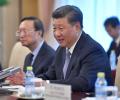
Xi said China is ready to work with Pakistan to forge a closer China-Pakistan community of shared future in the new era.

The Modi government finds itself in a contradiction of its own making. It has encouraged pro-Russian, Westophobic public sentiment while setting strategic policy that's exactly the opposite, points out Shekhar Gupta.

US admiral's suggestion for a revival of a strategic maritime quadrilateral with Japan, Australia and India leaves China livid, says Rajeev Sharma.

By jettisoning the vision of multilateral world in favour of a Han Empire, China has posed a major long term challenge to India. India must stand firm against Chinese expansionism but also keep a door open for future detente by making a clear distinction between Chinese people and the current Chinese leadership, observe Lieutenant General Ashok Joshi (Retd) and Colonel Anil Athale (Retd).
'Relations between India and Japan are robust and devoid of either shadow of history or any irritant.' 'In fact, there is plenty of warmth and goodwill earned over history. There are no negatives but only opportunities,' notes Dr Rajaram Panda.

India-China relations have always attracted Parliament's attention and there have always been useful and productive and constructive discussions how to engage with China, notes Rup Narayan Das.

Since 2016, when India was officially recognised in US law as a 'major defence partner', Washington has purposefully upgraded the defence relationship.

The 2 countries signed 15 agreements including one on defence cooperation after Prime Minister Narendra Modi held 'productive discussions' with President Joko Widodo.

Russia on Monday accused the US of "actively" exploiting the "contradictions" between India and China to its advantage and asserted Moscow and New Delhi accumulated mutual trust and confidence based on decades-old ties that would help the two sides to deal with the current geopolitical turbulence.

China on Monday said Sri Lanka has allowed its satellite and missile tracking ship to berth at the Hambantota port on Tuesday, but declined to reveal details of talks with Colombo leading to the bankrupt island's government reversing its earlier stand to defer the high-tech vessel's entry.

The India that needs strategic alliances, defence cooperation and engaging meaningfully with neighbouring countries is quietly moving ahead with confidence, says Tarun Vijay
 © 2026 Rediff.com - Advertise with us - Disclaimer - Privacy Policy - Sitemap - Feedback - About us - Terms of use - Grievances